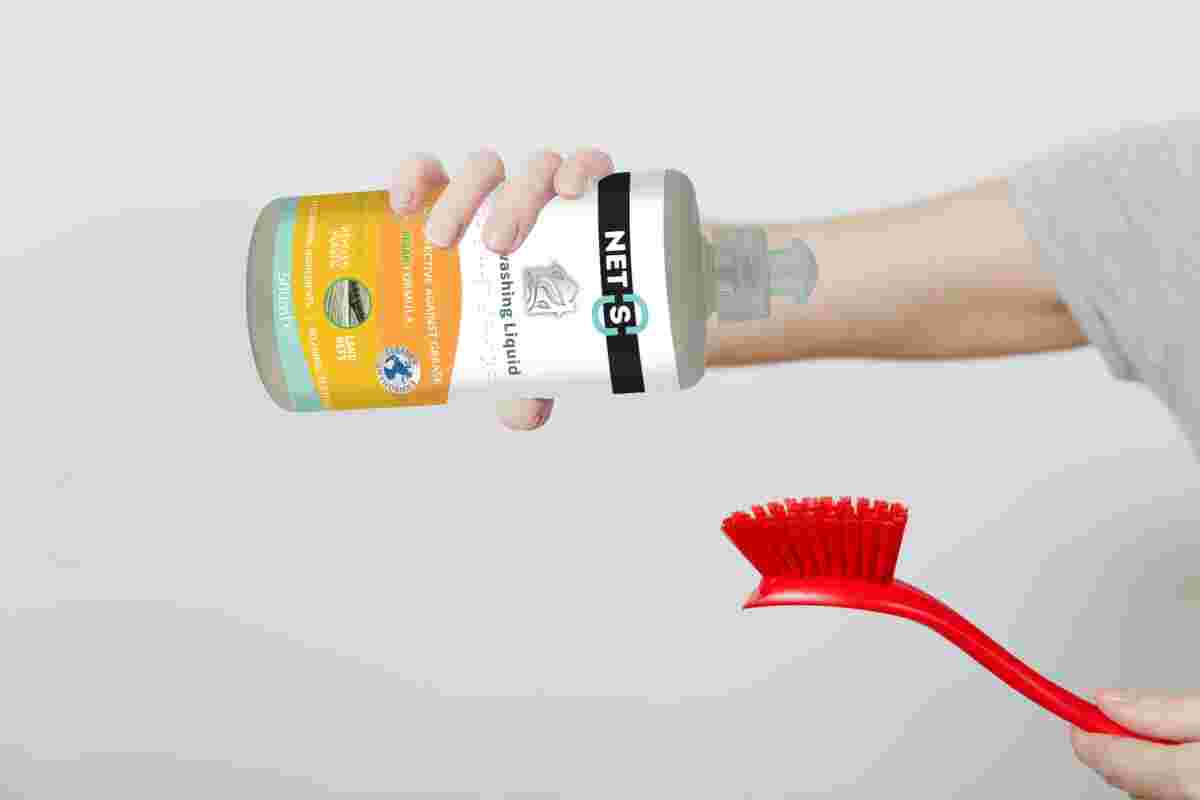
Reducing the amount of plastic that ends up in the oceans requires better management of it on land before it becomes a threat to aquatic life. Based on this principle, the R&D department of NILO created a product line aimed at recycling land-based nets and utilizing them to develop ecological packaging for household and personal care products with Vegan formulations.
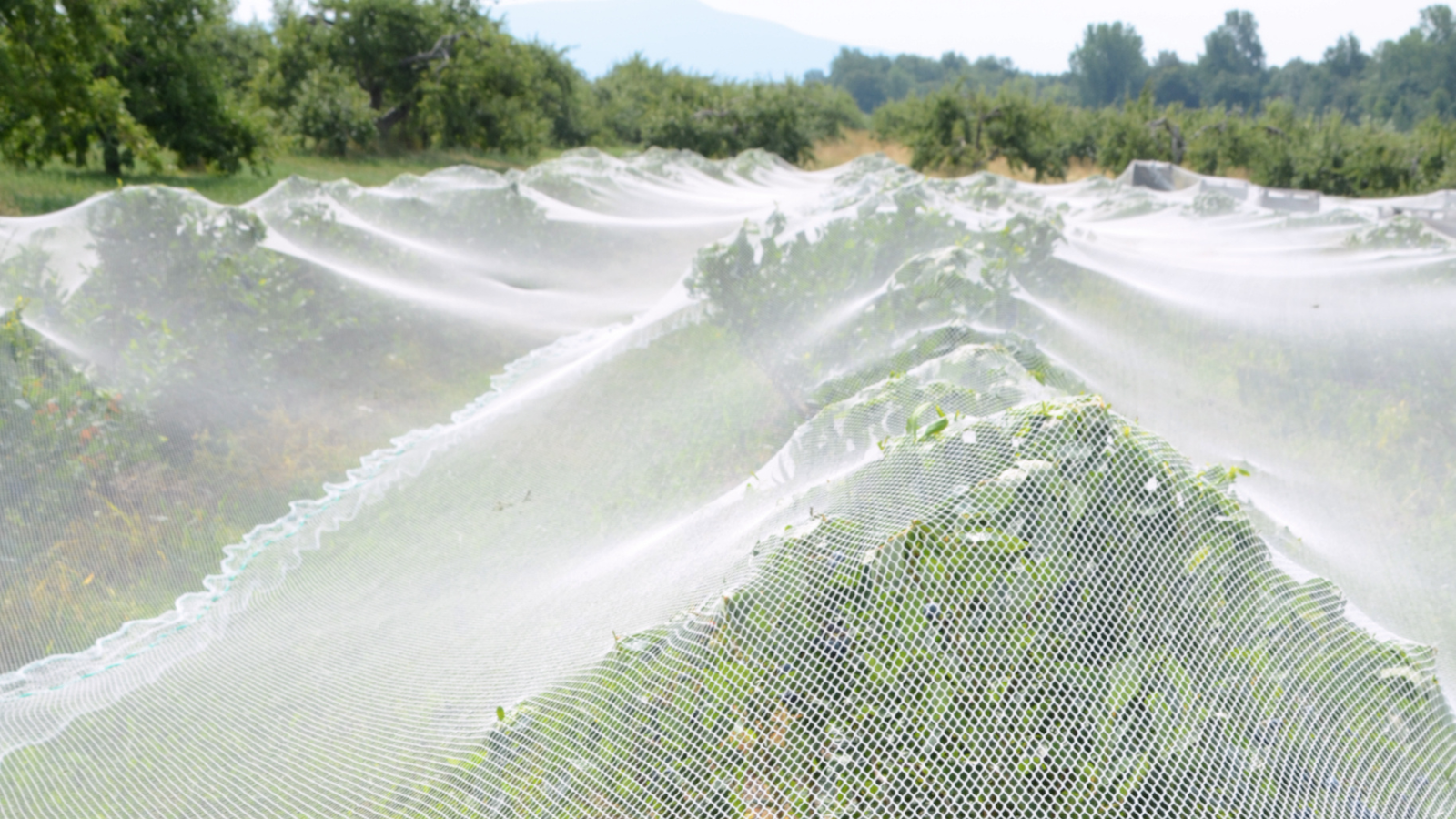
One of the most common and significant forms of plastic used in agriculture is plastic netting, which serves both protective and functional roles in plant growth and fruit harvesting. These nets are mostly made of High-Density Polyethylene (HDPE) and are primarily used to protect crops from external factors that can affect their integrity and yield. Such factors include extreme weather conditions like hail, strong winds, snow, heavy rainfall, high temperatures, and intense solar radiation. Another important function of land-based nets is to protect crops from damage and diseases transmitted by living organisms such as insects, parasites, and birds.
High-Density Polyethylene (HDPE) is a material with excellent recycling and reusability potential across numerous applications. Once land-based nets reach the end of their life cycle, HDPE can be fully recovered and transformed into new products, reducing the need for virgin material.
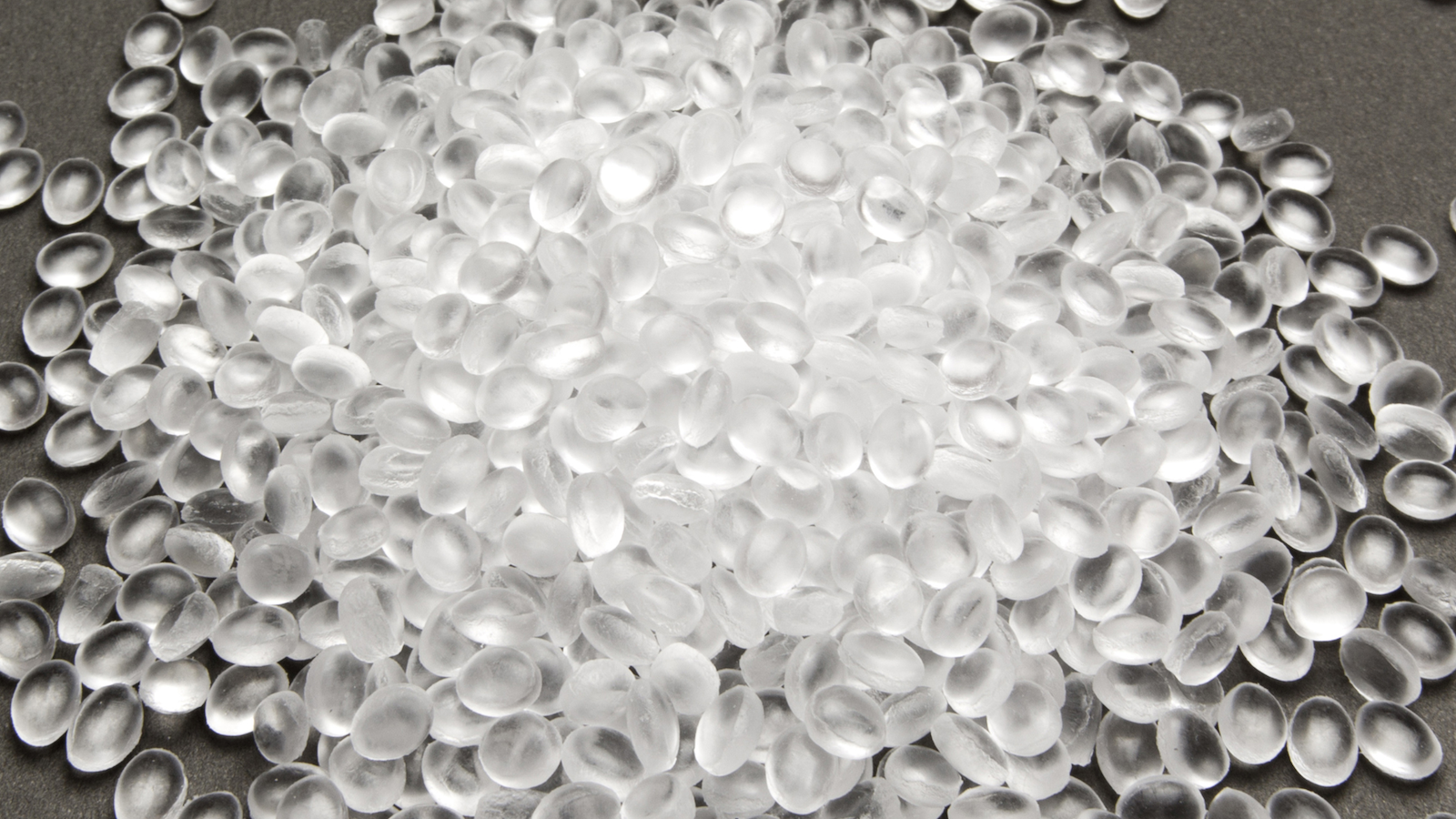
HDPE holds a significant share of the market, ranking third among the most popular materials for packaging in the European market. However, producing one ton of HDPE requires 59.2 million Btus or 17,349.81 kWh of energy and releases 1.48 tons of carbon dioxide, clearly demonstrating the urgent need for recycling this material.
Holding a leading position in private label product manufacturing, NILO decided to move in this direction leveraging the recyclability of HDPE agricultural nets, threads, and twines to encourage our clients to create and distribute ecological products under their own brand names, using this specific raw material for packaging detergents and cosmetics.
After extensive research, we contacted recycling companies specializing in plastic waste from agricultural activities and gained insight into the collection process of such materials from farmlands and crops, as well as their processing and transformation into high-quality plastic raw material (r-HDPE) in granule form.
Collection–Processing–Recycling Procedure:
Plastic waste containing plastic fibers, such as nets and threads made of HDPE, is collected from a large number of agricultural sites and then gathered, carefully inspected, and categorized at the processing facility. There, the materials undergo multiple processing stages including shredding, separation, cleaning, drying, and extrusion. After these steps, the material is tested to ensure it meets the required quality and performance standards.
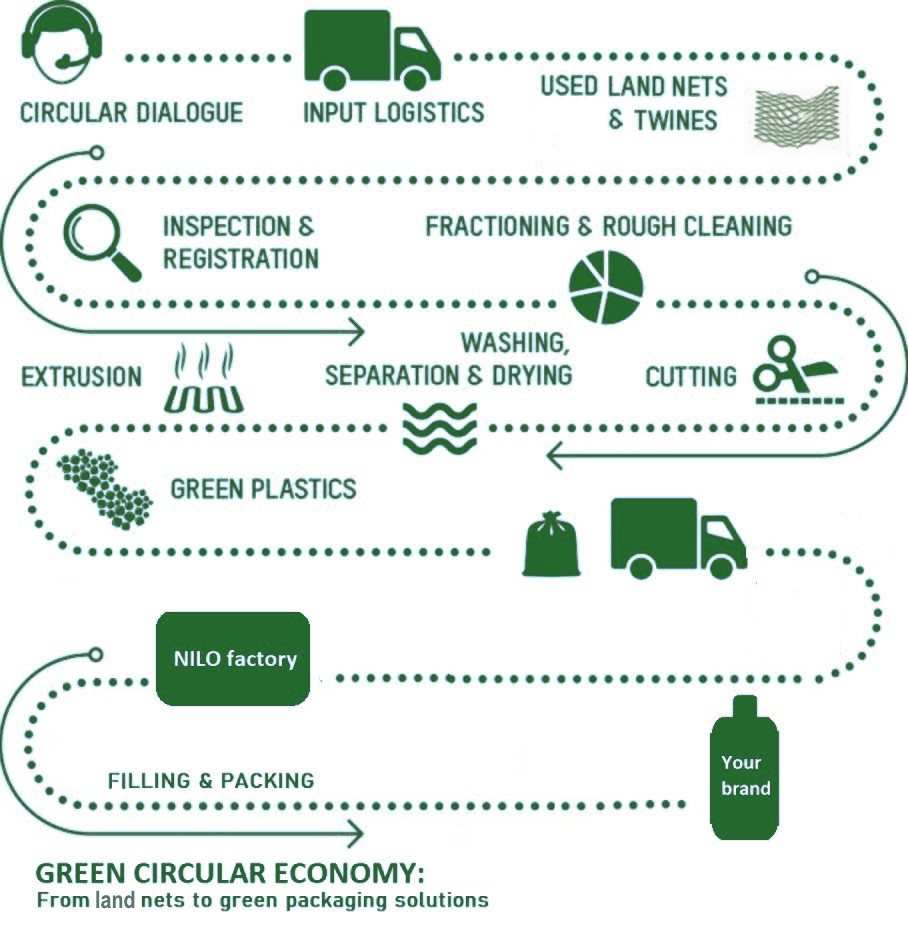
Transformation process of land-based plastic waste into high-quality r-HDPE plastic raw material for the creation of ecological packaging
Creation of the ecological line:
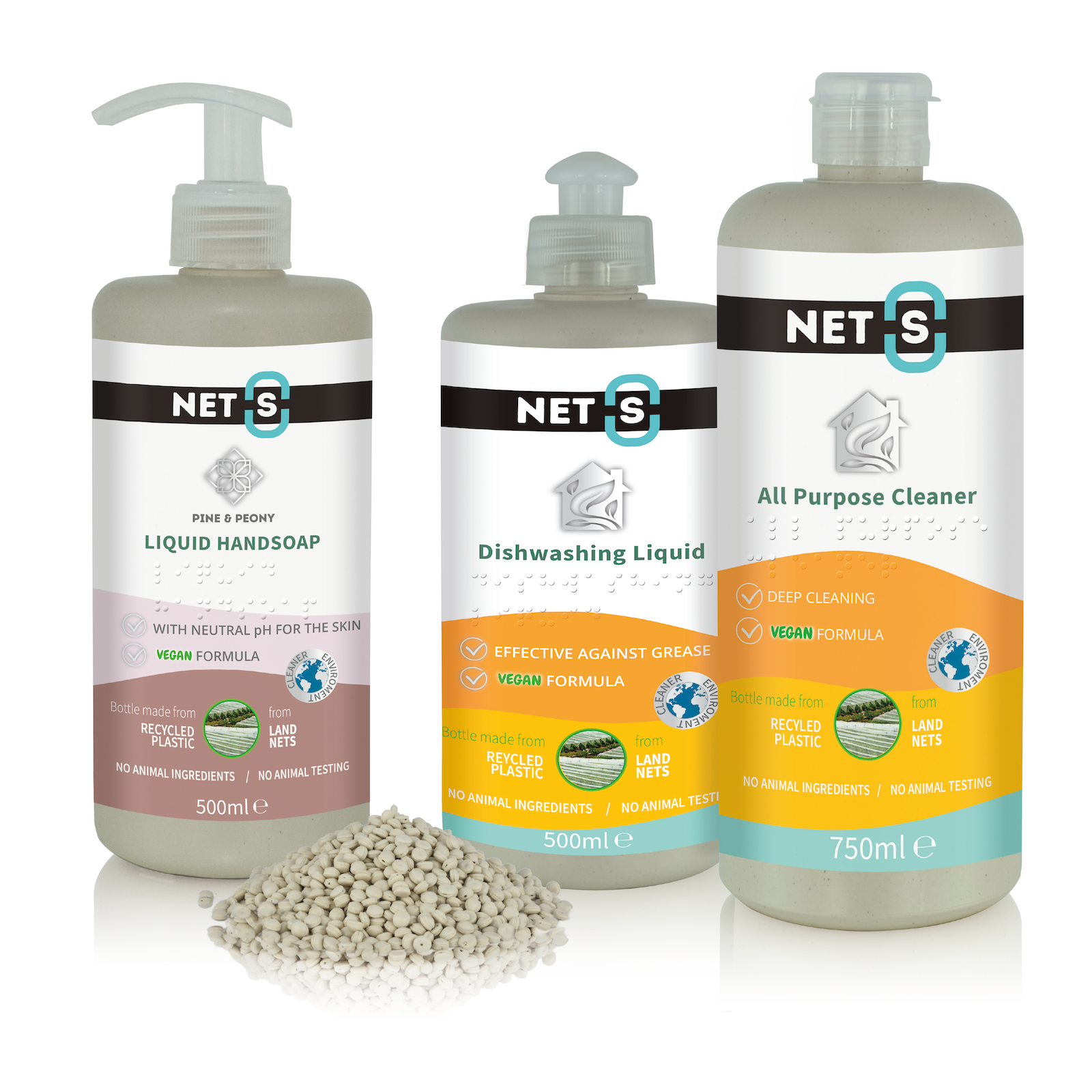
NILO’s R&D department developed a range of household and personal care products packaged in recycled r-HDPE plastic sourced from agricultural sector materials.
“Our vision for integrating environmentally friendly packaging has a long history within the company and combines thorough efforts, countless testing hours, and extensive research to achieve this goal.”
“With the REOCEANUM range of detergents and personal care products, we witnessed the positive response to the call for cleaner oceans, as the packaging bottles are made from recycled plastic derived from ocean nets, significantly contributing to the reduction of waste that pollutes and disrupts marine ecosystems and to the protection of aquatic life.”
“Continuing this philosophy, the NET(S) line closes the plastic loop on land. The NET(S) household products use recycled plastic derived from land-based nets from agricultural activities, such as greenhouse nets. Circular economy becomes a tangible reality, as the life cycle of plastic takes on a new dimension.”
The new line was named NET(S) to communicate our company’s vision for products and processes with Net Zero Emissions. To further expand the ecological impact of the products, the line features environmentally friendly Vegan formulations, free from animal ingredients and animal testing. Additionally, transparent pumps and caps made from recycled and recyclable plastic were used to facilitate post-use recycling. Finally, the label design followed ecological criteria, using raw materials certified by FSC® and PEFCTM Sustainable Forest Management standards, ensuring they originate from responsibly managed certified forests and controlled wood sources.
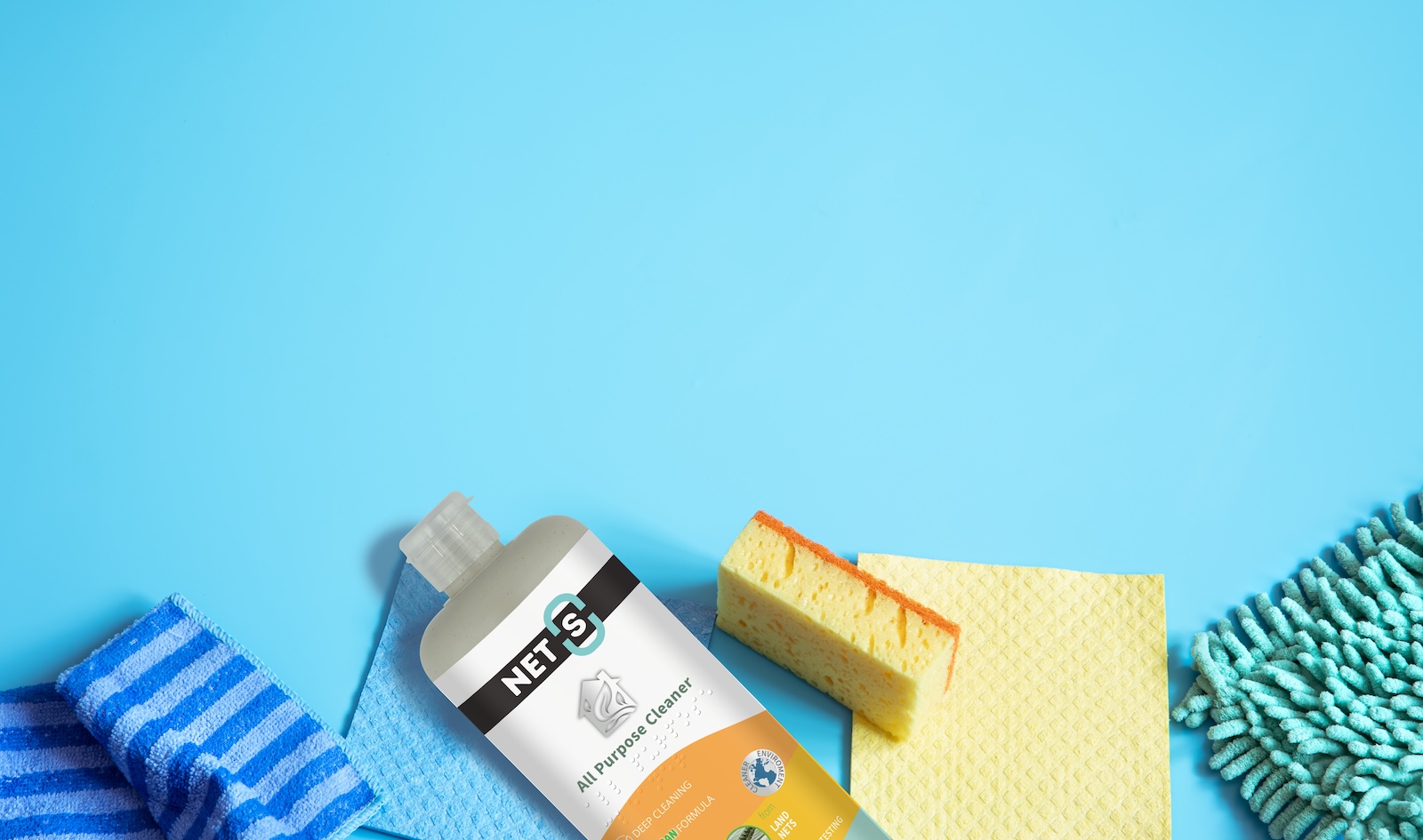
“With the new NET(S) household product line, NILO once again strives to promote an ecological way of life and to realize a genuine, practical model of circular economy on the path toward a NET ZERO EMISSIONS future. The NET(S) products embody precisely this; an endless cycle of sustainable production and consumption of goods.”