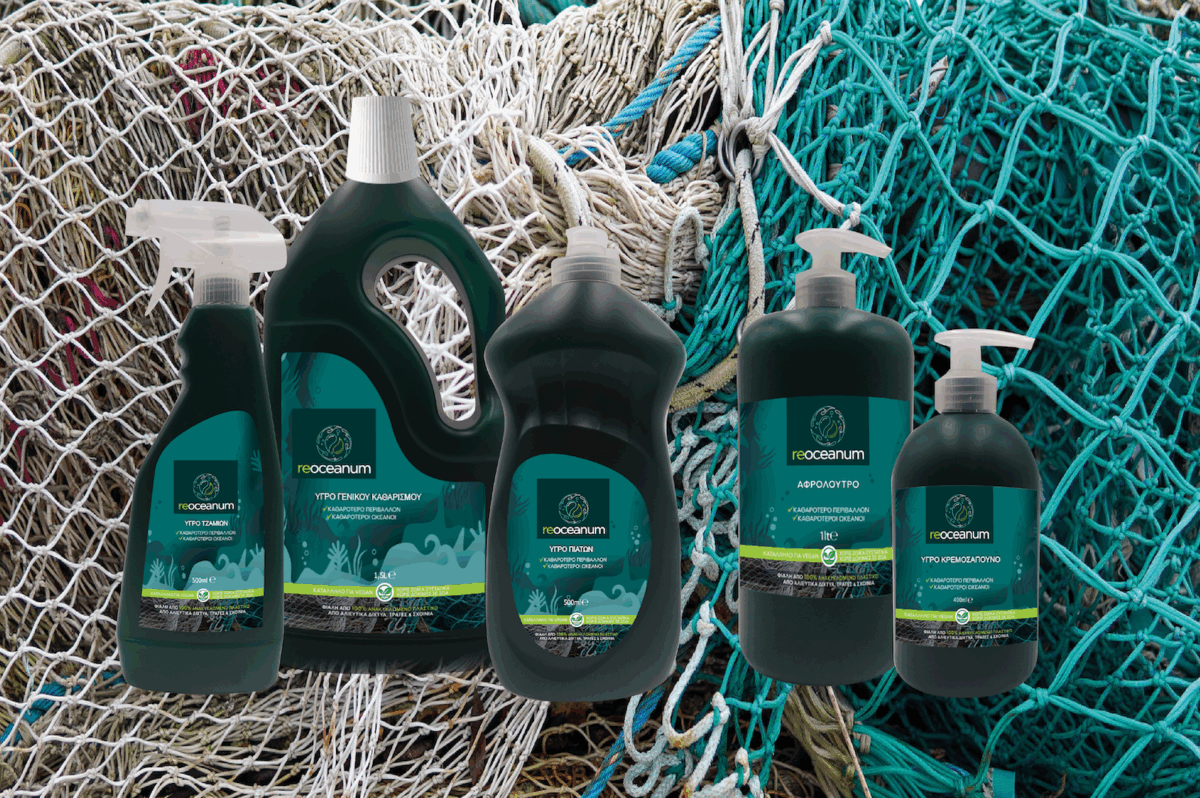
NILO supports ecological initiatives and collaborations that aim to design products with a low carbon footprint on the planet. As a result, it engages in partnerships with suppliers and producers, testing packaging made from recycled materials as well as environmentally friendly raw materials. Specifically, the company’s R&D department, since July 2018, has initiated research and exploration for new, innovative, and sustainable product solutions to offer to its clients, promoting circular economy and eco-living.
Considering the significant environmental burden caused to marine ecosystems by plastic waste from the fishing industry, the R&D department began exploring ways to reuse this specific waste stream, with the goal of responsibly repurposing it into ecological packaging.
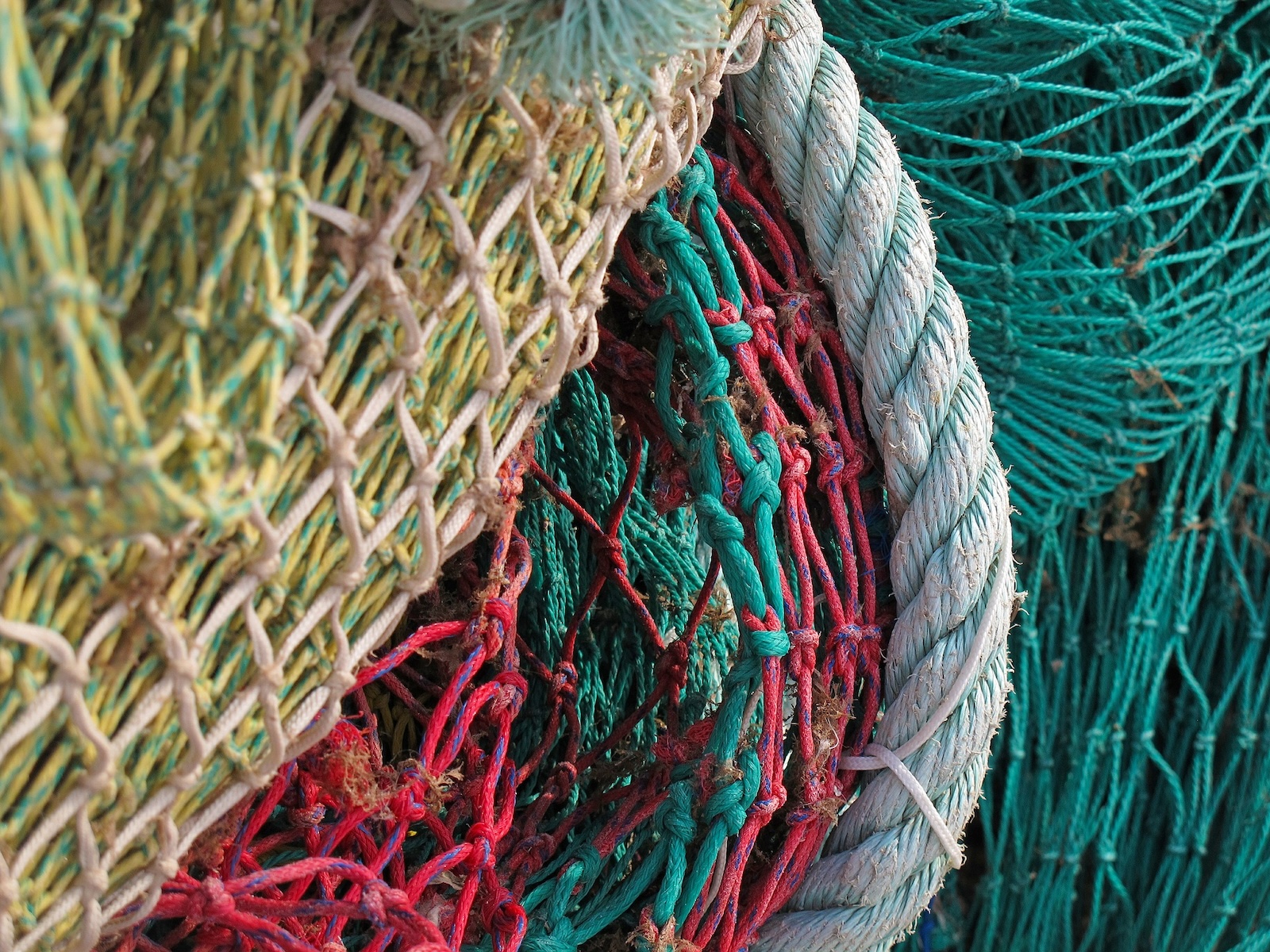 The first step was to contact recycling companies that handle plastic waste originating from the maritime and fishing industries (used fishing nets, trawls, and ropes).
“Through our communication with recycling companies that process plastics ending up in the seas and oceans in vast quantities, we developed great interest in the collection, processing, and transformation procedures that convert plastic into a usable form; one that not only helps reduce ecosystem pollution but also gives life to a type of packaging with minimal environmental impact. We all immediately recognized the countless possibilities and advantages of this project.”
The recycling process begins with sourcing mainly plastic fibers from fishing nets, trawls, rigid plastics, and ropes from an increasing number of ports, net manufacturers, and plastic collectors worldwide (more than 800 different types of nets, ropes, and trawls). Once these used plastic materials arrive at the processing facility, they are sorted according to type and color, then shredded, washed, separated, and dried. The outcome of this production/recycling process is the Green Plastic raw material in granule form.
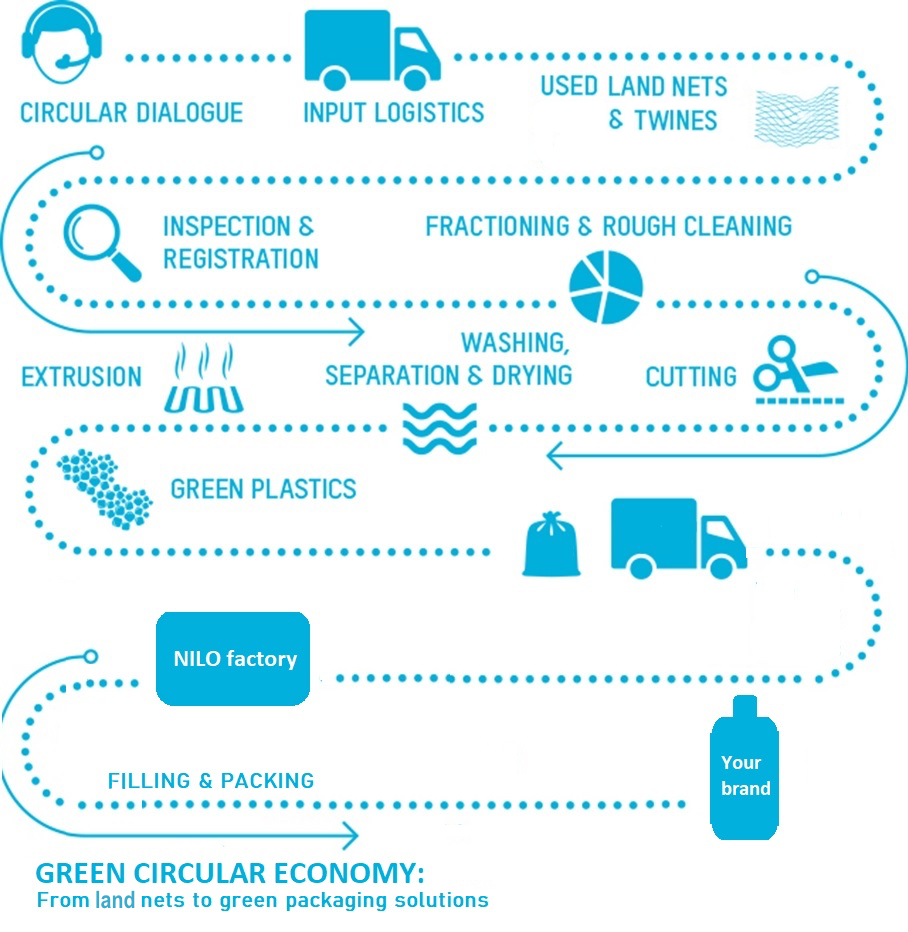
Process of transforming plastic waste from seas and oceans into high-quality plastic raw material (Green plastic) for the creation of ecological packaging
Following the selection of responsible and reliable suppliers of Green Plastic raw material, the R&D department collaborated with plastic packaging manufacturers, setting the challenge of integrating the recycled raw material into their production processes to create packaging made from these specific recycled materials.
After receiving the first samples and subjecting them to a series of quality and performance tests, the R&D department was ready to present the first final prototypes of packaging intended for both detergents and cosmetic products. Thus, the line of ecological products REOCEANUM was “born.” The exclusively ecological character of the series was complemented by vegan product formulations, strictly excluding animal-derived ingredients and animal testing.
“The creation of the REOCEANUM line represents a true achievement of NILO’s broader vision to promote Green Circular Economy principles, strengthen Corporate Environmental Responsibility and Green Entrepreneurship, and ultimately educate consumers in Green, Eco-friendly, Recyclable, and Reusable standards, inspiring a shift in consumer behavior where environmental impact becomes a key factor in daily choices.”